
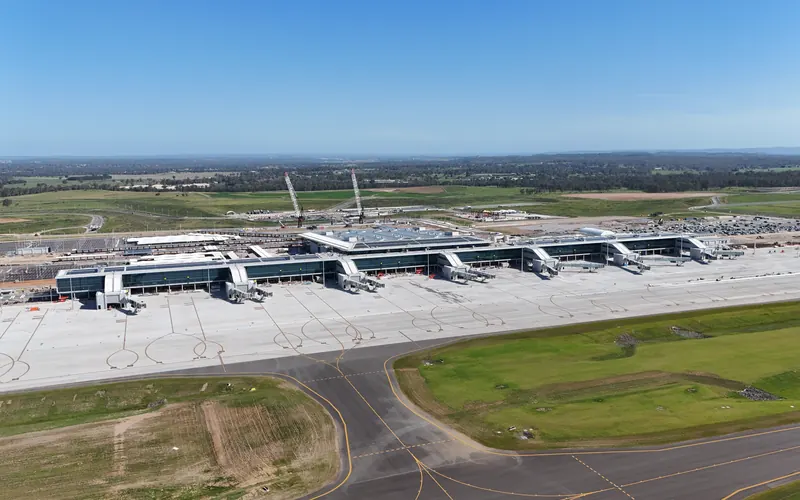
Western Sydney International Airport at Badgerys Creek opened to freight on 27 July 2026, and it's scheduled to open to passengers on 25 October 2026. If you run a business in Camden, Campbelltown or anywhere across Macarthur, you've probably heard plenty about it already.
This post is about the smaller picture. What could it actually mean for an owner-run café, trade business, gym, workshop or shop down the road from it? And what's worth doing now, while things are still taking shape?
I'll be straight with you: nobody can tell you exactly how the airport will affect your business. I can't either. But I've run a multi-site business through growth, with leases, staff and capital spending to manage, and I know which questions are worth asking early.
What we actually know
Some numbers are on the public record. The airport is expected to support almost 28,000 direct and indirect jobs by 2031. The NSW Government's Aerotropolis Sector Plan talks about almost 120,000 new jobs in the surrounding Aerotropolis by 2061. This is a long build.
Local business numbers are already moving. ABS figures show actively trading businesses in the Camden LGA grew 6.3% between July 2024 and June 2025, the fastest of the six Macarthur and Western Sydney council areas I cover (Camden, Campbelltown, Wollondilly, Liverpool, Penrith and Fairfield). Campbelltown grew 3.4% over the same period.
More businesses and more workers bring more opportunity. They also bring more competition for staff, customers and space.
Staffing: the pressure most owners will feel first
When big employers move into an area, they compete for the same people you employ. Good staff may get more offers, and wage expectations can rise.
Ask yourself who you'd least want to lose, and what it would cost if they walked out. A lot of the time, keeping a good person comes down to rosters, respect and a clear path forward, not just the hourly rate. Know your numbers so a wage rise doesn't catch you out.
Demand and capacity
More people working and living nearby could mean more customers. That's great, as long as you can actually serve them without things falling apart.
Before you add staff, vans, seats or floor space, look at where your current hours go. In most businesses I've worked in, there's capacity hiding in paid hours that never turn into billed or served hours. Fix that first. It's cheaper than growing into a mess.
Pricing
If your costs go up and demand is strong, prices you set a few years ago may not hold.
Know your real margin by job, product or menu line before you quote the next big contract or sign on a new regular customer. Being busy isn't the same as being profitable.
Competition and new customers
New operators will see the same opportunity you do, and some will be bigger and better funded. You don't need to beat them on everything. You need to be clear about what you do well and charge properly for it.
New customers will turn up too: contractors, new businesses, workers moving into the area. Work out which ones are worth chasing and which would just make you busier before you say yes.
Property and leases
If you rent, an area with growing demand can mean landlords expect more at renewal. Pull out your lease now. Check when it ends, what your options are, how rent reviews work and what the make-good obligations say.
If you're thinking about a second site or a bigger space, take your time over the numbers. A lease is a long commitment, and capital spending made on a hunch is hard to undo.
A simple checklist for right now
You don't need a big strategy document. Answer these honestly. If several of them stump you, that's worth knowing.
- Margins: Do I know my real gross margin by job type, product or menu line?
- Pricing: When did I last review my prices, and am I actually charging them?
- Capacity: Do I know the gap between paid hours, productive hours and billed hours?
- Key staff: Who would hurt most to lose, and what would keep them?
- Wages: Could I absorb a wage rise without wiping out my profit?
- Customers: Which customers are genuinely profitable, and which aren't?
- Suppliers: Are my main supplier terms still competitive?
- Lease: When does my lease end, and what are my options and rent review terms?
- Cash: Could I fund growth (stock, staff, equipment) without strain?
- Owner time: Could the business take on more without everything running through me?
- Stress test: If demand doubled, what would break first?
Grow from strength, not stress
The airport is a real opportunity for Macarthur, but it's not a reason to panic or to rush into spending. The owners who do best will usually be the ones who got their margins, pricing, people and capacity sorted before the pressure arrived.
If you'd like to work through this checklist with someone who's run a business locally and will roll up their sleeves alongside you, send me a note through the enquiry form. No charge, no pitch. Just a conversation about where your business stands.
Jay Cartwright, Meridian Business Strategy, Camden NSW
Sources
Facts as published by these sources; check for updates.
- Department of Infrastructure, Transport, Regional Development, Communications, Sport and the Arts, Western Sydney Airport set to open
- Western Sydney Airport, Job opportunities
- NSW Government, Western Sydney Aerotropolis Sector Plan (PDF)
- ABS, Counts of Australian Businesses, including Entries and Exits, Jul 2021–Jun 2025